The Only Workout Routine You Need as a Woman. And Yes, It Is Science-Backed
Every few months a new fitness trend promises to be the thing that finally gets you results. Spoiler: it is never the thing. The best workout routine for women that actually works is not a trend, it is a structure, and once you understand why it works, you will stop second-guessing it.
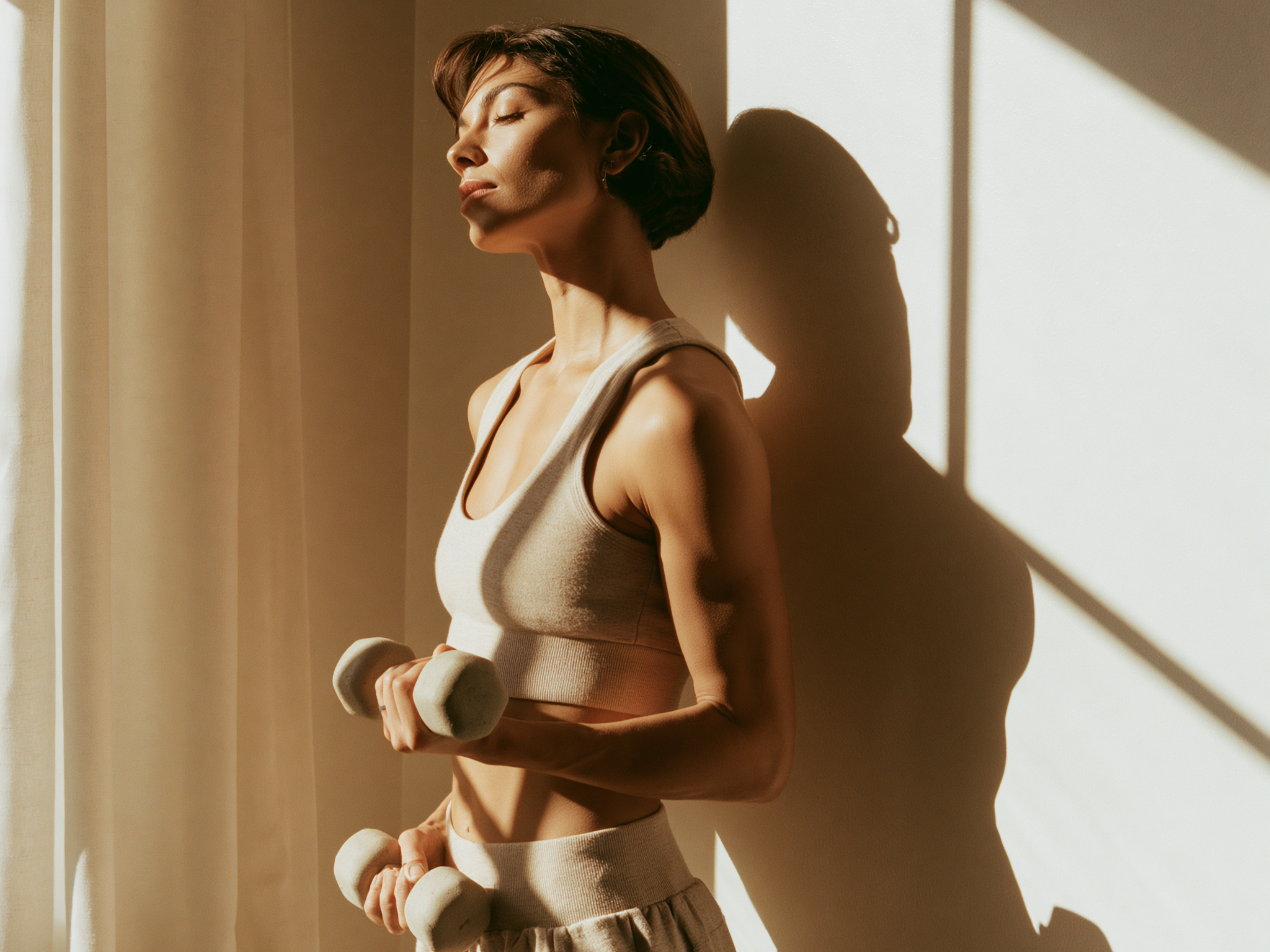
Here is the structure: lift weights two to four times a week, walk as much as humanly possible, and add whatever movement you genuinely enjoy on top of that. That is it. No complicated splits, no five-thirty AM boot camps you will quit by February. Just a framework with real physiology behind it.
Why Strength Training Is Non-Negotiable
Women lose muscle mass progressively from their thirties onward. Less muscle means a slower metabolism, less bone density, more injury risk, and harder fat loss. Resistance training directly counters all of that. It also improves insulin sensitivity, which matters more for body composition than most people realize. Two to four sessions per week, hitting all major muscle groups, is what the research consistently points to. You do not need more than that. You need to be consistent with that.
Muscle is not an aesthetic choice. It is a long-term investment in how well your body functions.
The Part That Feels Too Simple to Work
Progressive overload is the principle that makes strength training effective. It means you gradually increase the demand on your muscles over time, whether that is more weight, more reps, or less rest. Your body adapts to whatever you consistently ask of it. Ask the same thing every week with no progression, and adaptation stalls. This is why following the same routine for months can feel boring. It should feel slightly harder than last time. That friction is the whole point.
The repetition is also intentional. Switching programs every few weeks is one of the most common ways women accidentally undermine their own progress. You need enough sessions with the same movements to actually get better at them. Skill and strength develop together. Consistency with a simple program outperforms novelty every single time.
Walk Like It Is Your Job
Non-exercise activity thermogenesis, or NEAT, is the energy your body burns through all movement that is not structured exercise. Walking is its most accessible form, and research shows it has a significant impact on metabolic health, cortisol regulation, and cardiovascular function. The women who stay lean and feel good long-term are almost always the ones who move a lot throughout the day, not just during their workout window. Walk to the coffee shop. Take the call on your feet. Park farther away on purpose. It compounds.
The short version: Strength train two to four times a week with progressive overload, walk consistently throughout your day, and add one or two sessions of movement you actually like. That is the entire framework. Everything else is detail.
Where the Fun Stuff Fits In
HIIT, yoga, Pilates, dance, whatever you actually look forward to. These belong in your routine as additions, not replacements for strength work. HIIT gives you cardiovascular conditioning in a short window. Yoga and Pilates build mobility, body awareness, and the kind of low-grade mental reset that no productivity app can replicate. The science does not say these modalities are less valuable. It says they do different things. Use them for what they are good at.
Enjoyment is also not a soft metric. If you hate your workout routine, you will eventually stop doing it. Movement you choose because it feels good is movement you will return to. That consistency, over years, is what produces results that last.
Enjoyment is not a nice-to-have in a workout routine. It is the variable that determines whether you actually stick with it.
The best workout routine for women that actually works is not the most complicated one or the most punishing one. It is the one built on a foundation of strength, daily movement, and a little bit of whatever makes you feel like yourself. Stop searching for the perfect program. Start showing up for a simple one.
The goal was never to be impressive in the gym for six weeks. It was to feel strong for the next forty years.
Questions Women Actually Google About Working Out
What is the best workout routine for women that actually works long term?
The structure that holds up is strength training two to four times a week, as much walking as you can fit in, and whatever movement you genuinely enjoy on top of that. No complicated splits required, just consistency with a simple framework that has real physiology behind it. The best workout routine for women that actually works is not the most punishing one, it is the one you will actually keep doing for years.
How many days a week should women lift weights?
Two to four sessions per week, hitting all major muscle groups, is what the research consistently points to. You do not need more than that, you need to be consistent with that. Women start losing muscle mass progressively from their thirties, so resistance training is less of an aesthetic choice and more of a long-term investment in how your body functions.
Why do I stop making progress even when I keep working out?
If you are doing the same routine with the same weights week after week, your body has already adapted and stopped being challenged. Strength training works through progressive overload, meaning you need to gradually increase the demand over time, whether that is more weight, more reps, or less rest. Switching programs every few weeks is one of the most common ways women accidentally stall their own progress, because skill and strength develop together and that takes repetition.
Does walking actually count as exercise for fitness and fat loss?
Yes, and it counts more than most people give it credit for. Non-exercise activity thermogenesis (NEAT) is the energy your body burns through all movement outside structured workouts, and research shows walking has a significant impact on metabolic health, cortisol regulation, and cardiovascular function. Women who stay lean and feel good long-term are almost always the ones who move a lot throughout the day, not just during their workout window.
Where does HIIT or Pilates fit into a workout routine for women?
HIIT, Pilates, yoga, and similar modalities belong in your routine as additions to strength training, not replacements for it. HIIT gives you cardiovascular conditioning efficiently, while yoga and Pilates build mobility, body awareness, and a mental reset that is genuinely hard to replicate. The science does not say these are less valuable, it says they do different things, so use them for what they are actually good at.